


















Industry application


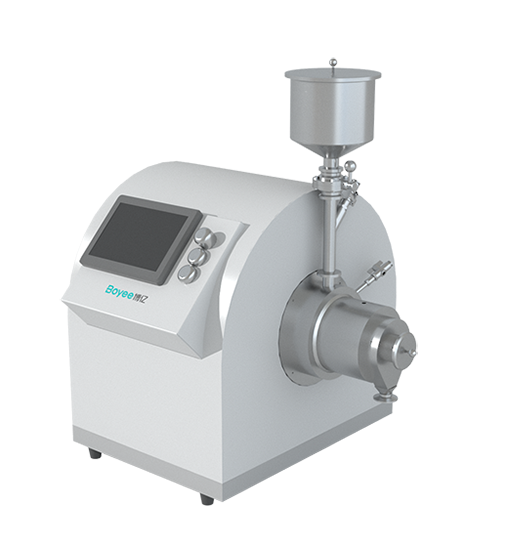
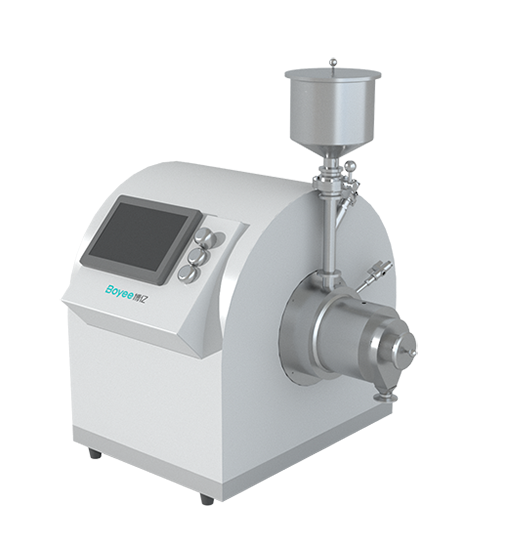
I. GFM-1L Dry Bead Mill

1. Grinding, Classification, Dust Removal and Collection in One Integrated System
The GFM-1L Dry Bead Mill combines grinding, classification, dust removal, and powder collection within a single closed-loop system, eliminating the material transfer and exposure steps required by separate standalone equipment.
Raw material is quantitatively fed into the grinding chamber, reduced through high-frequency shear and impact crushing, classified by centrifugal force into coarse and fine fractions, and the qualified fine powder is recovered directly through a cyclone separator and bag dust collector — all within one continuous process.

2. A Reliable Dry Grinding Option for Sulfide Solid-State Electrolyte Processing
Sulfide solid-state electrolyte materials are highly sensitive to moisture and oxygen, making dry, liquid-free grinding methods a preferred choice over conventional wet processing for certain stages of the production line.
The GFM-1L Dry Bead Mill's fully enclosed grinding and separation chamber, combined with a contamination-free design, helps maintain a low-moisture processing environment while achieving stable, high-precision particle size control — supporting the dry grinding and dispersion requirements found in sulfide solid-state electrolyte production lines.

3. Laboratory-Scale Precision for R&D and Small-Batch Validation
With a batch capacity of 1.5-5 kg powder per run and energy consumption of approximately 3 kWh, the GFM-1L is sized for laboratory research and small-batch process development, allowing engineers to validate dry grinding parameters before scaling up to pilot or mass-production lines.
01
Asymmetric membrane design and plastic flow separation device; spindle speed: Φ590/1min; impeller speed: 4~6m/s; bidirectional vortex formed by counter-rotation.
02
Oxidation filter (pore size gradient design) with maximum surface density processing and filling performance (>99.2%).
03
The labyrinth seal adopts precision axial radial gap control (0.05-0.1mm) and multi-stage meandering runner design, forming an efficient pneumatic barrier under 0.3MPa gas pressure.
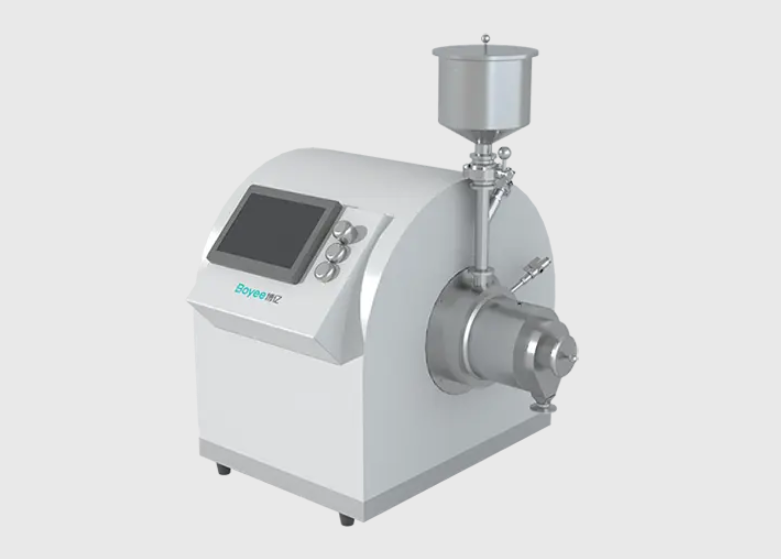

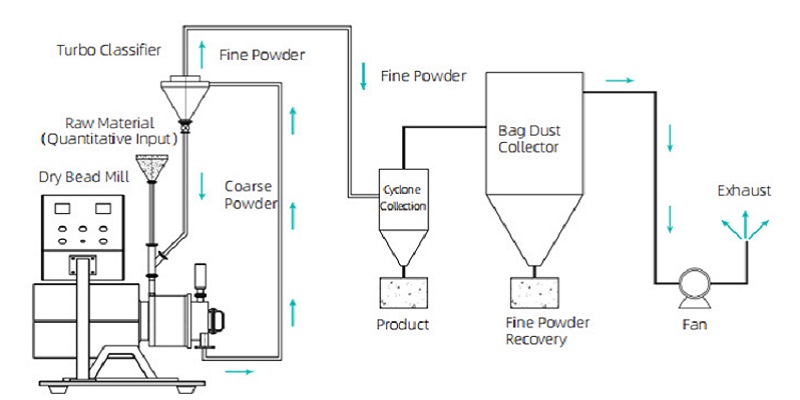
Dry Grinding Process
① Quantitative Input of Raw Material:The raw material is measured by a high-precision quantitative feeder and transported to the GFM dry bead mill.
② Crushing Coarse Powder Particles:Coarse powder is sent to the crushing zone, where particles are broken by high-frequency collisions between the impeller and grinding beads in the grinding chamber.
③ Full Shear Crushing:Under the action of the grinding rotor, the beads and material fully collide and undergo shear crushing, then are sent to the classification zone.
④ Grinding and Classification:After crushing, the material is classified into coarse and fine powder by centrifugal force; coarse powder returns to the grinding zone.
⑤ Fine Powder Separation and Recovery:Fine powder is discharged from the GFM dry bead mill and recovered via a cyclone separator and bag filter.
Technical indicator

Spindle Speed

1-8mm
Bead Diameter

Bead Loading

3KWh
Energy Consumption

Optimal Batch Capacity
GFM-1L
GFM-1L
Working Principle:
Reverse dual-spiral + TiN coating
Ceramic segmented screen
Permanent magnet synchronous motor + direct drive
Multi-channel water cooling + PID control
1
Volume of grinding
chamber(L)
1- 8
Bead Diameter(mm)
1.6-1.9
Bead Loading(KG)
1.5-5KG
Optimal Batch Capacity(powder/batch)
740
Flow Area(mm²)
0.5-4
Screen Gap(mm)
The grinding system can choose turbine and rod pin according to the requirements:
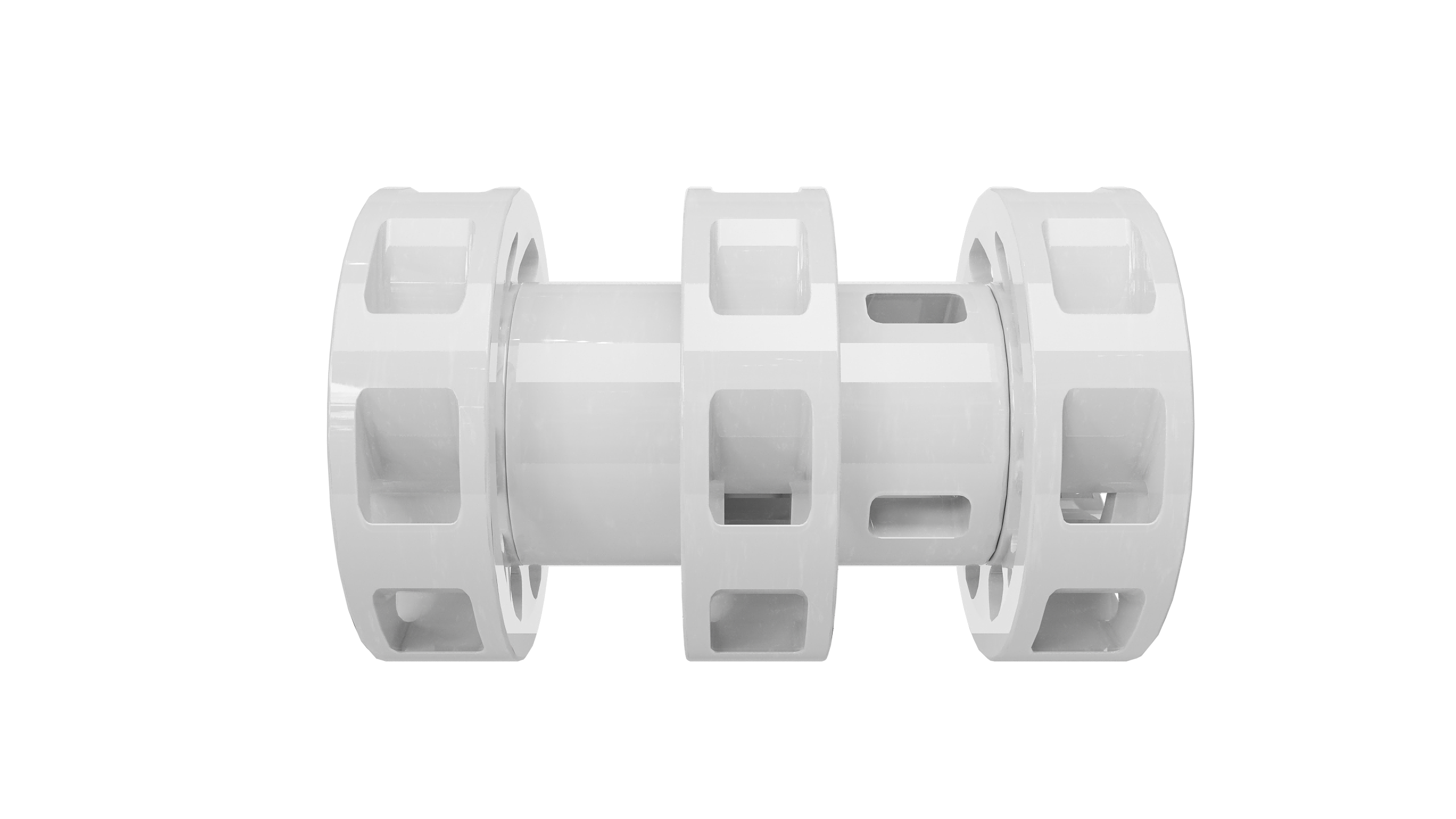
Turbine rotor
Providing more gentle and meticulous grinding effect can effectively prevent excessive material dispersion and improve TurboMax patented Turbine(Turbo) structure grinding quality and accuracy
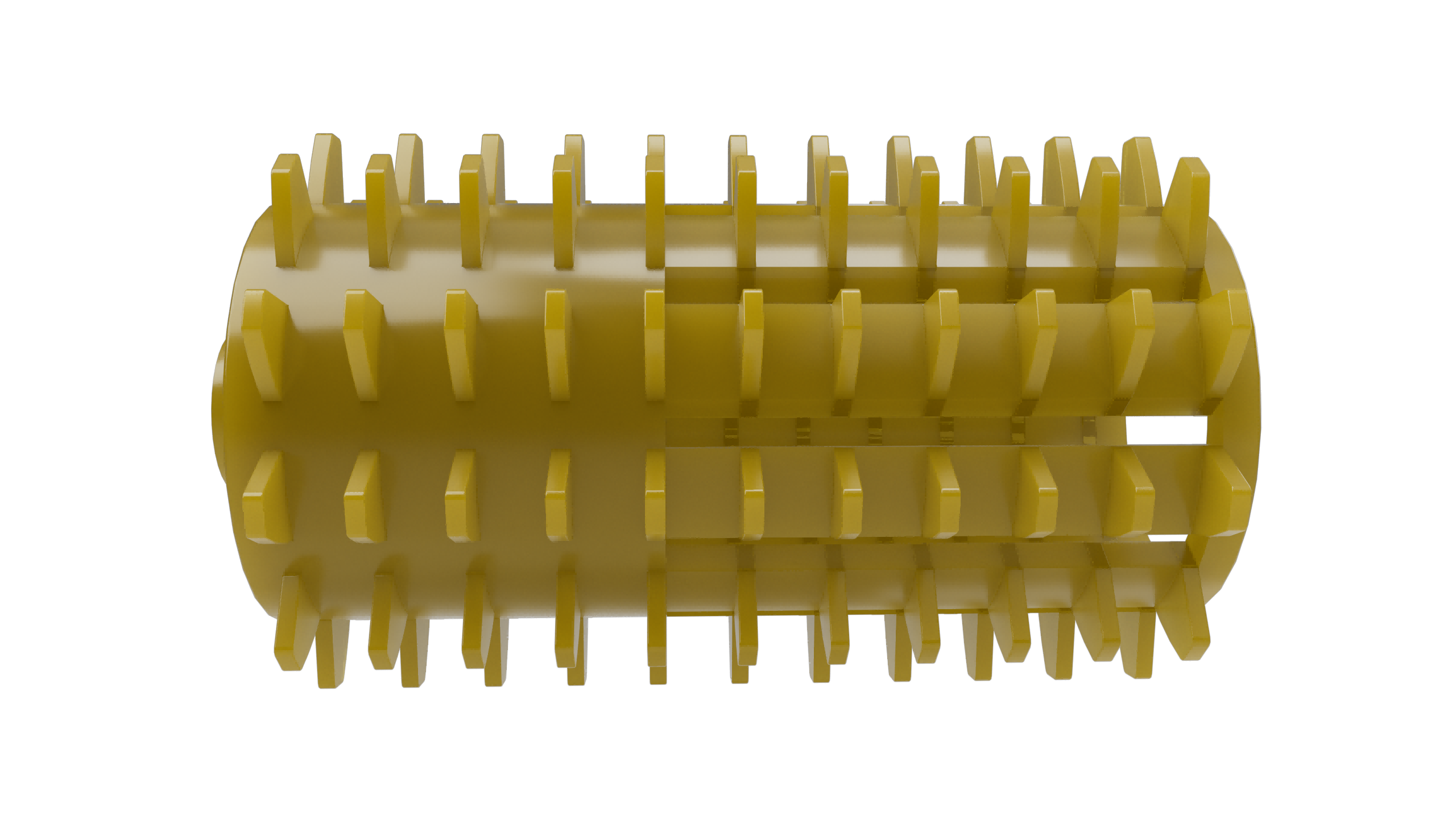
Rod pin rotor
The rod-pin rotor structure has high linear velocity, which can form continuous strong grinding in the grinding(Chamber), and the impact and grinding effect on the material is more intense

Zirconia
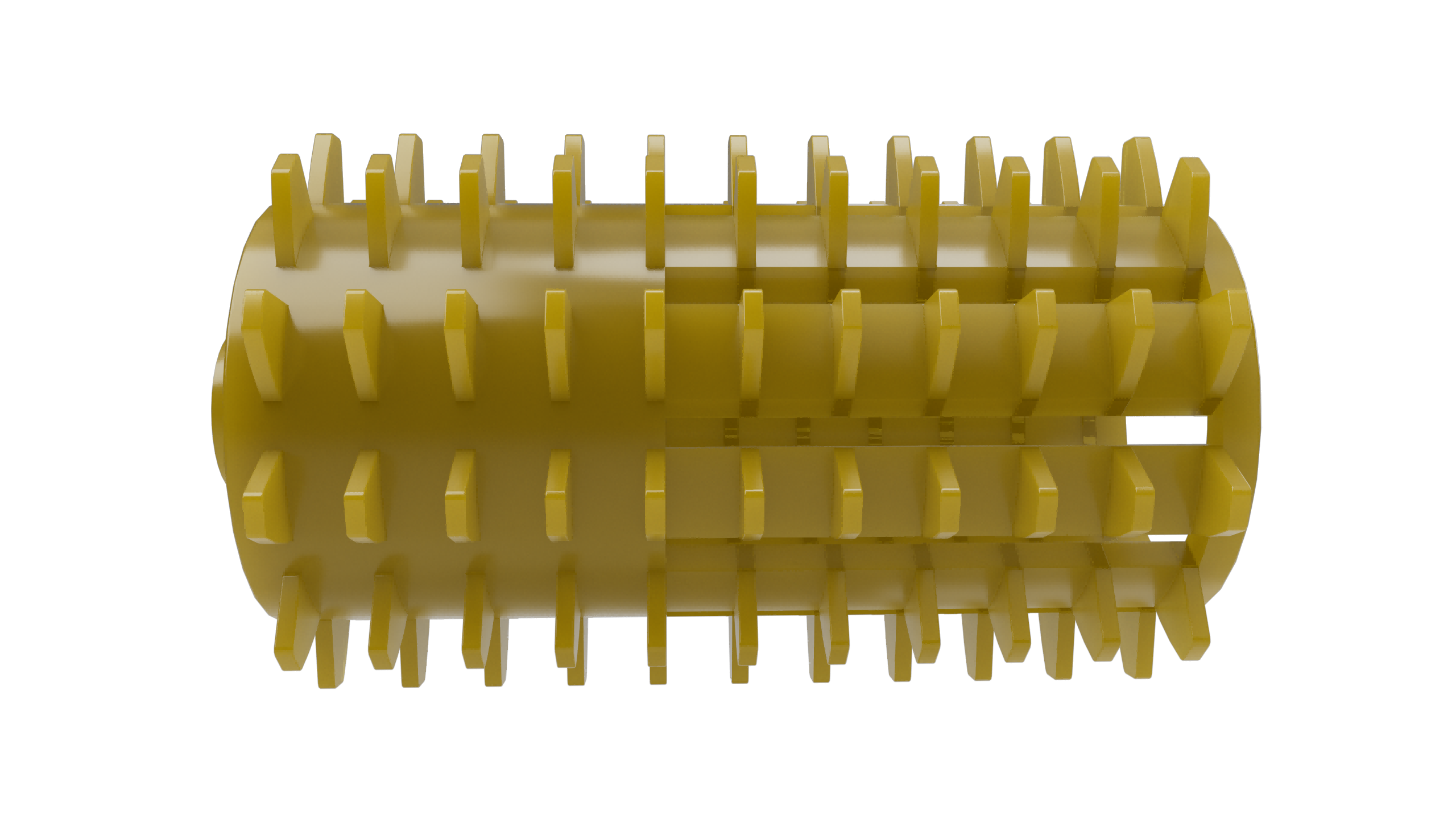
Polyurethane (PU)